
What happens to my fee if I cancel my IOE admission?
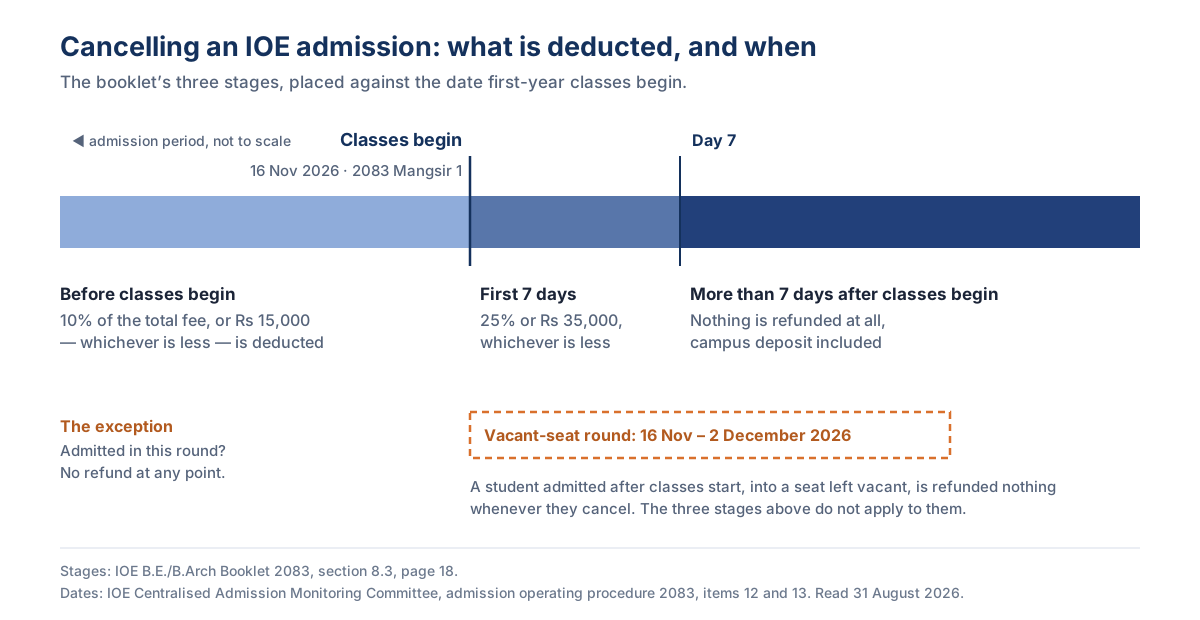
Before classes start, 10% of the total fee or Rs 15,000 is deducted, whichever is less. Within seven days of classes starting it is 25% or Rs 35,000, whichever is less. After that, nothing is refunded at all.
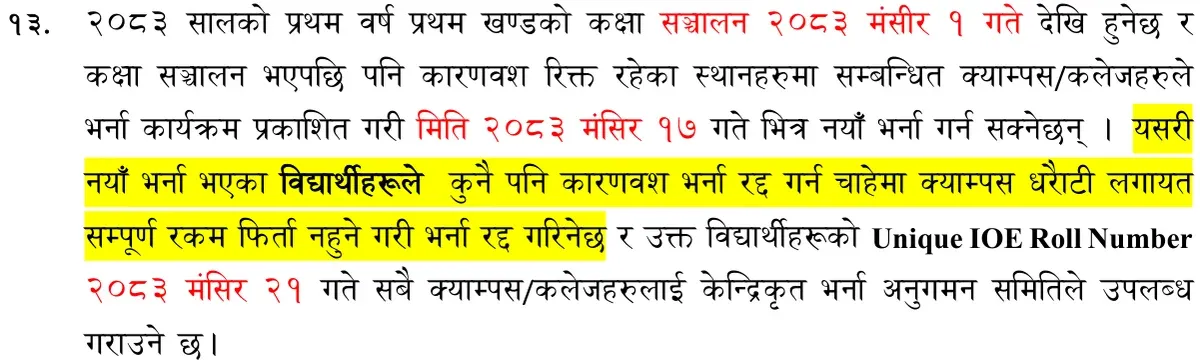
There is a published ladder, it gets steep fast, and the date it is measured against is fixed for the whole system: first-year classes for the 2083 intake begin on 2083 Mangsir 1, which is 16 November 2026. Cancel before that and the deduction is capped at Rs 15,000. Cancel in the first week of classes and it is capped at Rs 35,000. Cancel after that and nothing comes back at all, campus deposit included. The 2083 admission procedure applies the same booklet clause to affiliated colleges as to constituent campuses, so this ladder is the reference point across the cycle rather than a government-campus rule. One group is outside it entirely, and it is the group least likely to know.
| When you cancel | Deduction |
|---|---|
| Before classes begin | 10% of the total fee, or Rs 15,000 — whichever is less |
| Within 7 days of classes beginning | 25% of the total fee, or Rs 35,000 — whichever is less |
| More than 7 days after classes begin | Nothing is refunded, campus deposit included |
Which way does "whichever is less" run?
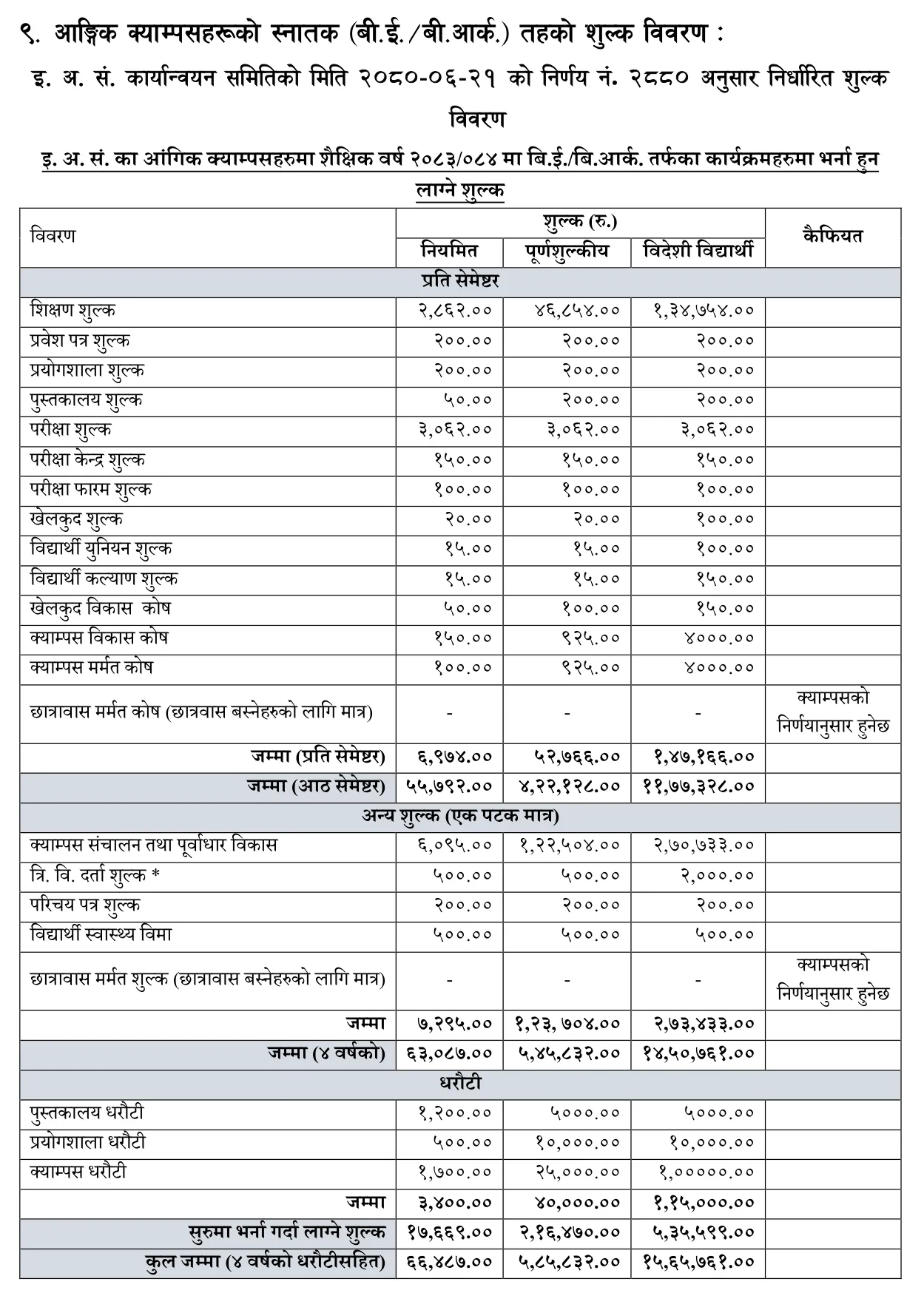
In the student's favour. On a large fee the flat cap is lower than the percentage, so the cap is what applies. On a Full Fee constituent-campus admission, where Rs 2,16,470 has already been paid, 10% would be Rs 21,647 and the cap holds it to Rs 15,000. That is the one piece of good news in this section.
Who gets nothing back whenever they cancel?
Anyone admitted in the vacant-seat round that runs after classes have started. The 2083 procedure lets campuses and colleges fill seats left empty right up to 2083 Mangsir 17, which is 2 December 2026, and then states plainly that a student admitted that way who cancels for any reason is refunded nothing, campus deposit included. The three stages above do not apply to them at all.
This is the rule most likely to catch someone out, because a late admission is exactly the situation where a candidate is still hoping for a better outcome elsewhere. If you are offered a seat after classes have begun, treat the money as spent the moment you pay it.
How is a cancellation actually recorded?
Through the central admission portal, not on paper at the college. The procedure requires every campus and college to carry out both cancellation and programme change through their login on the central admission system. Since a seat only exists once it appears on that portal, the same is true in reverse: ask for confirmation that the cancellation has been entered, and check it yourself before you pay anyone else.
What else can cancel an admission?
If verification of your originals shows different marks or details from what was submitted, or your name was published in error, admission is not granted, and is cancelled if it has already happened. And a student absent from class for seven days from the day classes begin, without giving proper notice, has their admission cancelled and the seat refilled from the merit list.
That second one surprises people. If you are admitted but waiting on a better list elsewhere, and you simply do not attend, you can lose the seat you paid for without cancelling anything and without the refund ladder ever applying. Tell the campus in writing if you will be absent.
Cancellation ladder and the two involuntary cases: sections 8.1 to 8.3 of the booklet, page 18. Class-start date, the vacant-seat round and its no-refund rule, and the portal requirement: items 10, 12 and 13 of the IOE Centralised Admission Monitoring Committee's 2083 admission operating procedure. That procedure is the later document and supersedes the booklet on dates — the booklet itself gives a class-start of 2083 Asoj 1, which is two months out. The booklet does not state whether the seven-day count includes the first day of classes, so treat the first week as the safe reading. The procedure routes affiliated colleges to the booklet for cancellation charges, but the booklet prints the ladder inside its constituent-campus section and does not restate it for private colleges, so ask any private college for its own figure in writing before you pay.
Sources
- IOE B.E./B.Arch Booklet 2083published 7 August 2026 · read 31 August 2026
- IOE Admission Guidelines 2083 (Centralized Admission Monitoring Committee)published 12 August 2026 · read 31 August 2026
Last reviewed by Ram Raj Thapa, Admissions Officer, Imperial College of Engineering. Every figure on this page is cited to the document it came from.