
Do I get my IOE deposits back?

Only if you complete the programme, only if you claim within one year of leaving, and only after anything you still owe the campus has been deducted. Students who drop out part-way forfeit their deposits entirely.
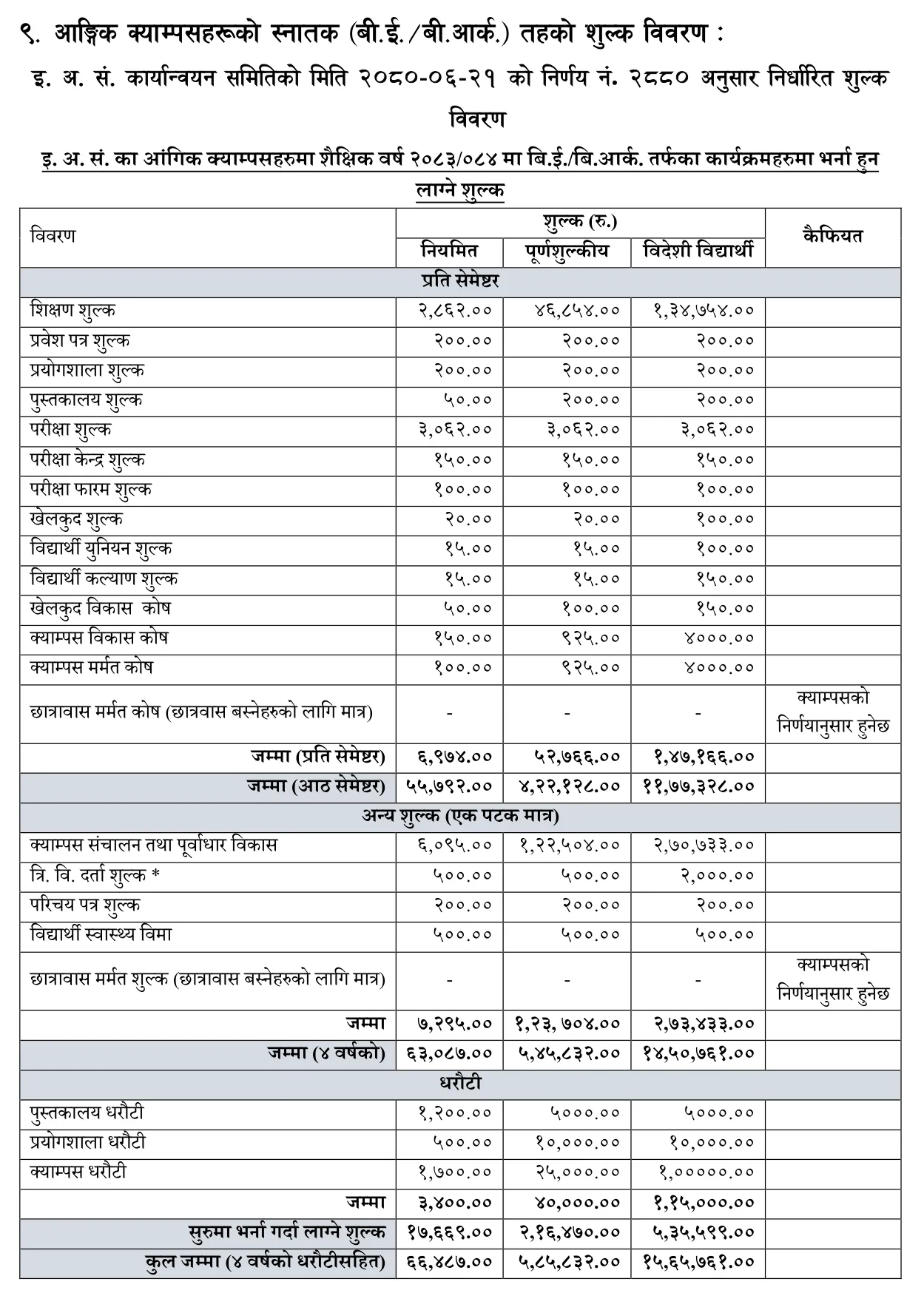
The deposits are genuinely refundable, on three conditions that are each easy to fall foul of. They are also larger than most people expect: Rs 3,400 on a Regular seat at a constituent campus, Rs 40,000 on a Full Fee seat, and Rs 1,15,000 for a foreign student, all payable on the first day. The booklet lists three separate deposits rather than one, and they are refunded as a group. Complete the programme and you may claim within one year of leaving the campus, less any other liabilities the campus deducts first. Leave part-way through and the whole amount is forfeited, which is a rule the cancellation ladder then sharpens further.
| Deposit | Regular | Full Fee | Foreign |
|---|---|---|---|
| Library deposit | Rs 1,200 | Rs 5,000 | Rs 5,000 |
| Laboratory deposit | Rs 500 | Rs 10,000 | Rs 10,000 |
| Campus deposit | Rs 1,700 | Rs 25,000 | Rs 1,00,000 |
| Total | Rs 3,400 | Rs 40,000 | Rs 1,15,000 |
Scroll the table sideways for Full Fee and Foreign.
What does "less other liabilities" mean?
The booklet's note to the fee section says that once a student has completed their study, other liabilities are deducted from the deposit and the remainder is refunded. It does not define what counts as a liability, so an unreturned library book, unpaid laboratory breakage or an outstanding charge would all plausibly land there. The refund is a balance, not a fixed sum, and nothing published says how it is itemised.
Why is the one-year clock a trap?
Graduates routinely forget the deposit, and after a year the claim is gone. On the Full Fee track that is Rs 40,000 walking away for want of a phone call. Put a reminder in your own calendar on the day you finish, because nobody will chase you about it.
Where does the deposit rule meet the cancellation ladder?
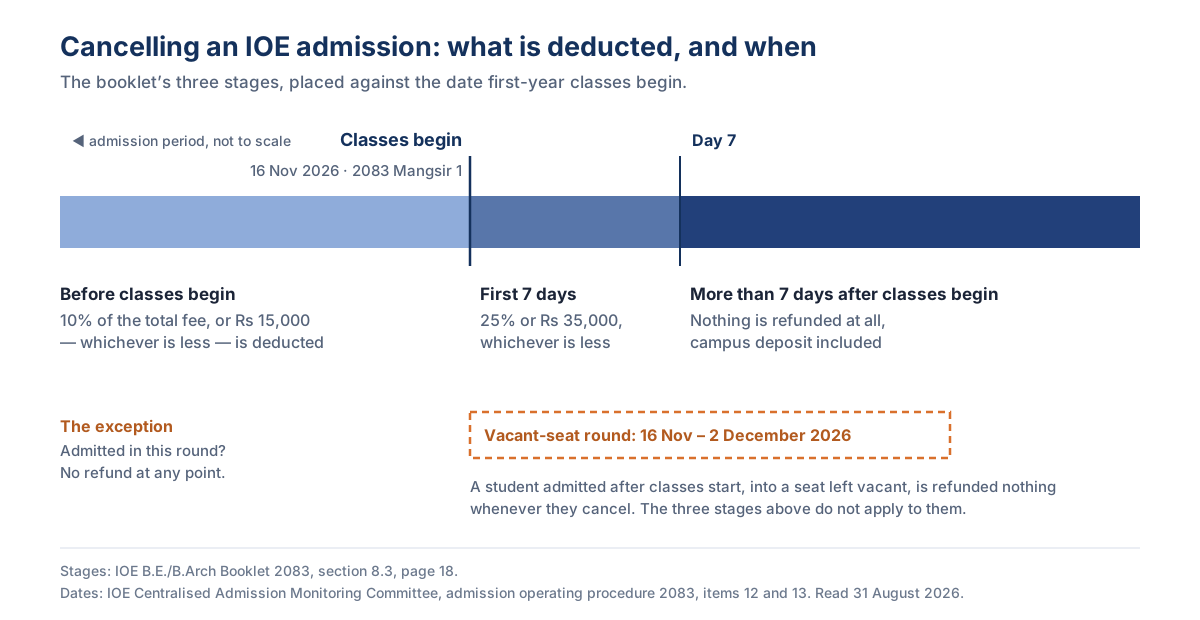
These are two sections of the same booklet and they overlap at exactly one point, which is worth tracing because the answer changes depending on the day you walk away. The cancellation ladder in section 8 names the deposit only in its final row — more than seven days after classes begin, where it states that nothing is refunded, campus deposit included. Its first two rows set a deduction against the fee and say nothing about the deposit either way.
Note which deposit that final row names. It says campus deposit, which is one of the three lines above and the largest of them: Rs 1,700 on Regular, Rs 25,000 on Full Fee. It does not name the library or laboratory deposits, though it does say the entire amount is non-refundable, so the sensible reading is that the whole Rs 40,000 goes and the campus deposit is simply the line called out.
| When you cancel | Deducted from the fee | What the booklet says about the deposit |
|---|---|---|
| Before classes begin | 10% of the total, or Rs 15,000 — whichever is less | Not mentioned in this row |
| Within 7 days of classes beginning | 25% of the total, or Rs 35,000 — whichever is less | Not mentioned in this row |
| More than 7 days after classes begin | Nothing is refunded | Campus deposit named explicitly |
Scroll the table sideways for What the booklet says about the deposit.
Worked through on the Full Fee track, where the deposits are Rs 40,000: cancel on the eighth day and the deposit is gone alongside the fee, because the booklet puts it inside that row. Cancel the week before classes start and the booklet caps the fee deduction at Rs 15,000 but does not state what becomes of the Rs 40,000. On the Regular track the same silence covers a much smaller sum, Rs 3,400.
That silence is the practical point. Do not assume the deposit returns simply because the early rows do not claim it, and do not assume it is forfeited either — the document does not say, and this page will not guess. Ask the campus to confirm in writing, before you pay, what happens to the deposit specifically if you cancel before classes begin. Get the answer against the deposit, not against "the fee", because the two are accounted separately.
Why does the forfeiture rule matter when you choose?
Combined with the cancellation ladder, the message is consistent: the system is built to make leaving expensive. That is worth holding in mind when a college suggests taking a seat now and deciding properly later.
Refund conditions from sections 8.3 and 8.4 of the booklet, page 18, and from note 3 to section 9, page 21, which is where the deduction of other liabilities is stated. Deposit amounts from the fee table at section 9, page 20, read off a rendered page image; the three lines sum to each printed column total. Where the booklet is silent this page says so rather than inferring. Private colleges set their own deposit and refund terms.
Sources
- IOE B.E./B.Arch Booklet 2083published 7 August 2026 · read 31 August 2026
Last reviewed by Ram Raj Thapa, Admissions Officer, Imperial College of Engineering. Every figure on this page is cited to the document it came from.