
Should I choose Civil, Computer or Electronics engineering?

Decide on the work you want to do rather than on the fee or the cutoff. All three award the same Bachelor of Engineering, all three are entered on the same rank, and every rule about attendance, assessment and time limits is identical across them.
The honest framing first: nobody can tell you which programme suits you from your rank, and a programme chosen because it was cheap or because the cutoff was low is the most common regret in Nepali engineering admissions. What the official documents settle is the part people worry about most: whether the choice carries consequences they cannot see. It does not. All three award the same Bachelor of Engineering under Tribhuvan University, all three sit examinations set by the same IOE Examination Control Division, and the rules on attendance, internal assessment and the eight-year completion window apply identically to each. So the choice is about four years of work and forty of career, and nothing else is riding on it.
What do the four years actually contain?
- Civil
- Structures, water, transport, geotechnics and surveying, with substantial fieldwork and a survey camp
- Computer
- Programming, data structures, operating systems, databases, networks, cloud and applied AI, with lab and project work throughout
- Electronics, Communication & Information
- Circuits, signals, embedded systems, communication and the networks that carry it
Three questions that are actually useful
Do you want to be outdoors on a site, or at a workstation? This separates Civil from the other two more reliably than any syllabus comparison.
Look at the semester five to eight subject lists, not the first year. First year is nearly common across programmes; the divergence is later and that is what you are choosing.
Ask a college which programmes it actually runs well. Every college has strengths, and the honest ones will tell you which of theirs is thin.
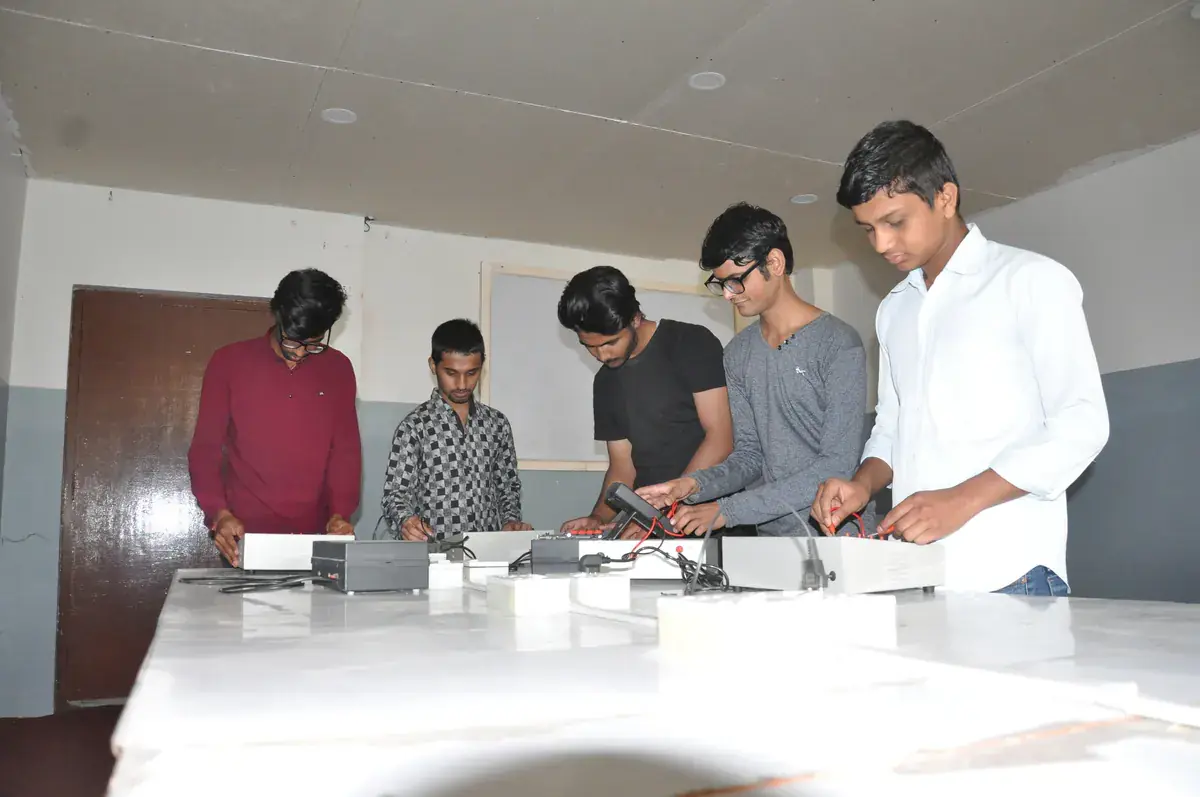
The first question is the one that does most of the work, and it is easier to answer by looking than by reading. These are the three settings, photographed at this college.

What should not decide it
The cutoff rank. It tells you what other candidates wanted last year, not what you should study for four years and then work in for forty. Cutoffs also move every year with that year’s applicants, so last year’s figure is a description of a crowd rather than a threshold you can plan against.
The fee, for the same reason. The degree does not change with the price of the seat, so a cheaper programme is a cheaper four years of work you did not want.
Can you change your mind afterwards?
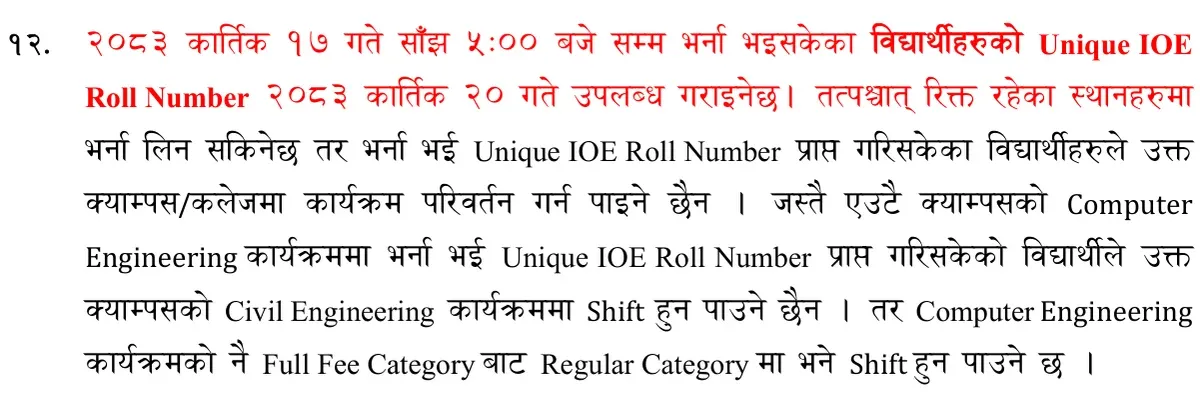
Partly, and only briefly. There is a published deadline after admission up to which a programme change can be made, and after it the choice is fixed for the degree. Moving between campuses later is harder still: a Regular seat is never transferred to another Regular seat, and the one route that exists means paying a full fee elsewhere in a lump sum.
Treat the priority form as the decision rather than the first draft of it. Everything after that is narrow, timed, or expensive.
And if none of the three is what you want
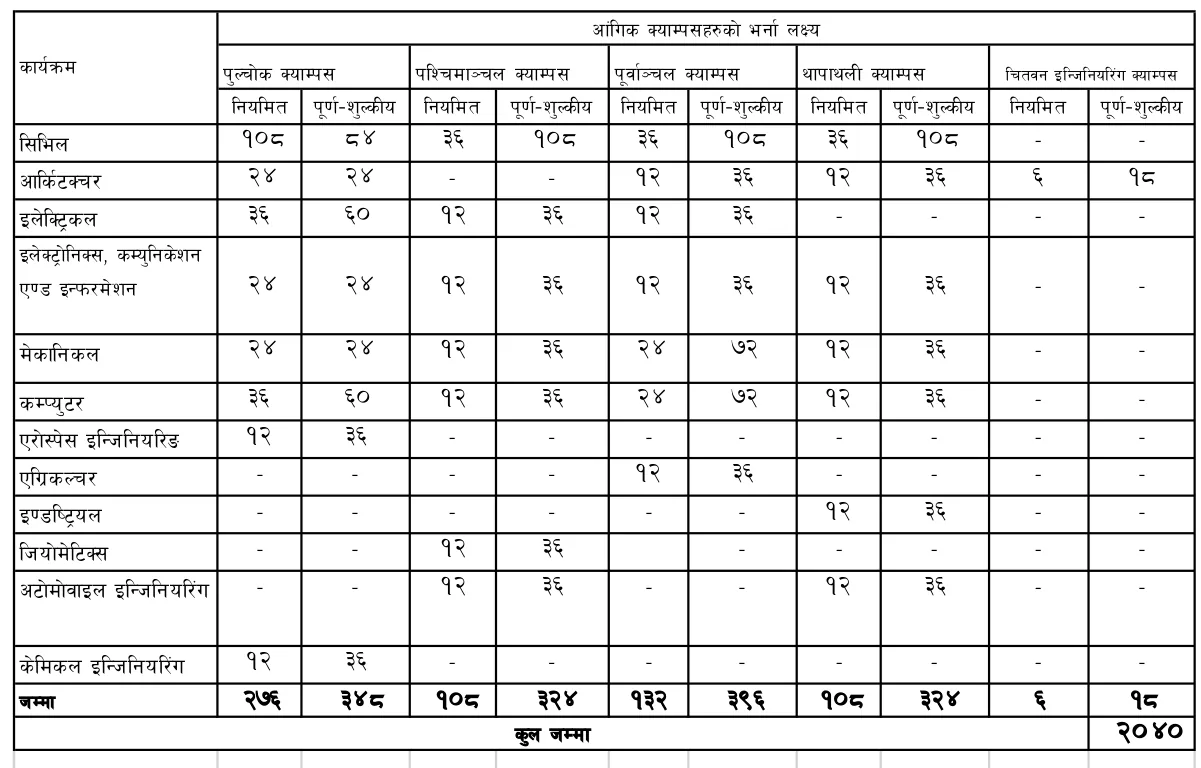
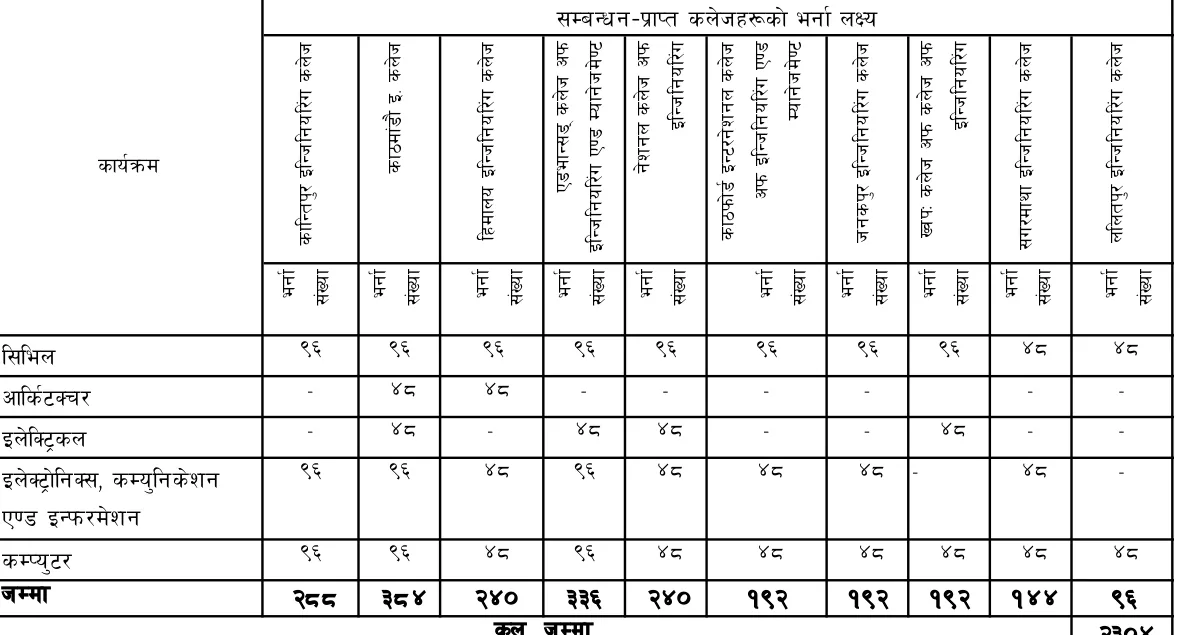
Check availability before you build a shortlist. Only five of the twelve programmes in the IOE system may be run by a private college, so Mechanical, Aerospace, Agriculture, Industrial, Geomatics, Automobile and Chemical are constituent-campus routes only, and several of them exist at a single campus.
The degree titles and the rules quoted here are from sections 11 and 12 of the IOE B.E./B.Arch Booklet 2083, pages 21 and 22. The subject descriptions are the ordinary content of the TU curriculum rather than a quotation from it; check the current syllabus for the exact subject list of a semester.
Sources
- IOE B.E./B.Arch Booklet 2083published 7 August 2026 · read 18 August 2026
Last reviewed by Ram Raj Thapa, Admissions Officer, Imperial College of Engineering. Every figure on this page is cited to the document it came from.