Formerly Janakpur Engineering College (JEC)Affiliated to Tribhuvan University
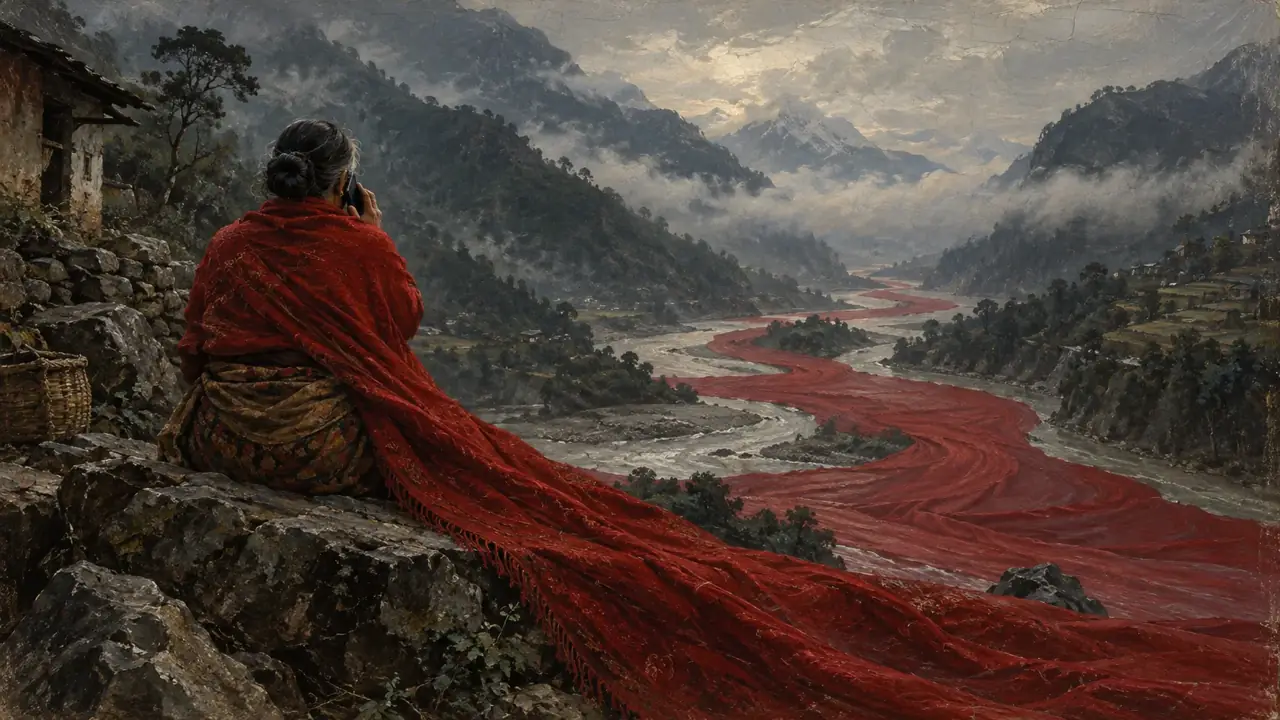
Illustration of a woman in a long red shawl holding a phone to her ear on a rock above the river, her shawl flowing into the valley.
Missing personsNDRRMA instruction

Report a missing person after the Rasuwa flood

icenepal.com · Imperial College of Engineering · Bhaktapur

After the 2026 Rasuwa flood · which office, what to bring, how DNA identification works, and the relief route

Illustration made with an image model, not a photograph

The authority listed 5,285 people as missing on 16 October 2026. District offices are checking that list name by name, and these steps make sure your family's record is right. Nepal Police's own bulletin for 14 October 2026 lists 4,720, a different count that the authority has not adopted. Nuwakot District Administration Office's local report of 16 October 2026, 6:00 pm lists 2,723 people missing in Nuwakot; that district register is not a national total.
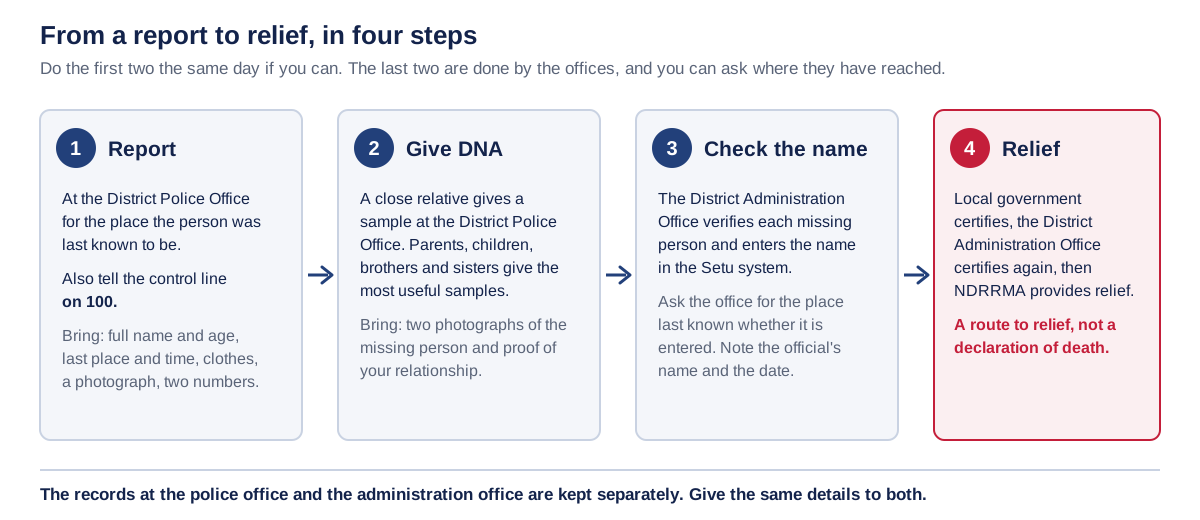
Four-step diagram: report to the police, give a DNA sample, check the name is entered, then the relief route
What a family does, in order. The first two are yours to do the same day; the last two are the offices’ and you can ask where they have reached.Scroll the diagram sideways to read it, or open the four steps for a family at full size.Imperial College of Engineering, from NDRRMA Situation Report #20 and its 30 September committee decision.
What the four steps for a family says, in words

Four boxes left to right, each with an arrow to the next.

One, report. Go to the District Police Office for the place the person was last known to be, and tell the Nepal Police control line on 100 as well. Bring the full name and age, the last place and time, what they were wearing, a photograph and two phone numbers.

Two, give DNA. A close relative gives a sample at the District Police Office. Parents, children, brothers and sisters give the most useful samples. Bring two photographs of the missing person and proof of your relationship.

Three, check the name. The District Administration Office verifies each missing person and enters the name in the Setu system. Ask the office for the place the person was last known whether the name is entered, and note the official’s name and the date.

Four, relief. The local government certifies the information, the District Administration Office certifies it again, and NDRRMA provides relief. The box says in red that this is a route to relief and not a declaration of death.

Along the bottom: the records at the police office and the administration office are kept separately, so give the same details to both.

Please report at the District Police Office for the area where the person was last known to be. NDRRMA's instruction names the relevant District Police Office, and if you are unsure which one that is, the Nepal Police control line on 100 can tell you. If you cannot travel, you can ask them to take the report by phone. Please give the same details to both, because the two records are kept separately and a name in only one of them can be missed.

It helps to have these ready:

  • Full name as written on the citizenship certificate or passport, and age.
  • The last place they were known to be, and the last time anyone spoke to them.
  • What they were wearing, and any vehicle, plate number or bus they were on.
  • A recent photograph, and any identifying mark.
  • Your own number, and a second number that will be answered if yours is not.
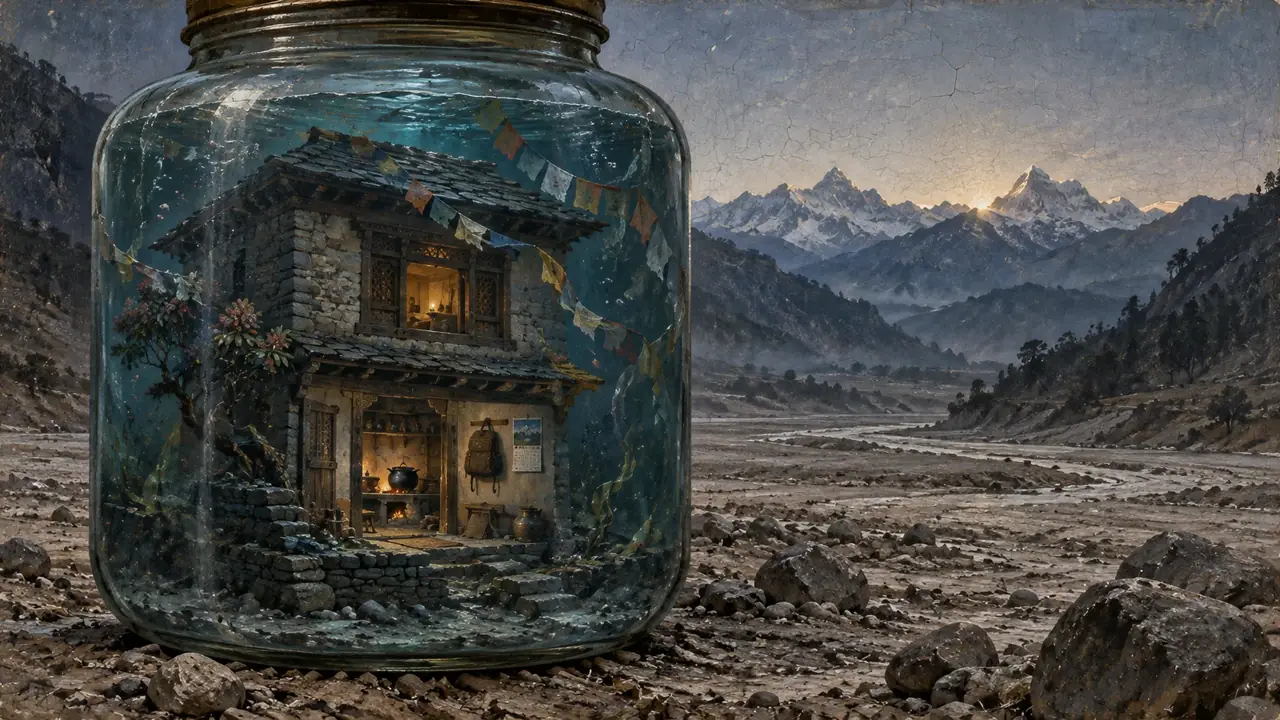
A Nepali stone house with a lit hearth, a school bag and prayer flags, sealed underwater inside a giant glass jar on a dry grey riverbed.
Every one of those names is a household. The count is a list of homes that are waiting.Illustration made for the Rasuwa flood report with an image model. It is not a photograph.

Identification is being done by DNA, so a sample from a close relative is the surest way to match a loved one. NDRRMA's instruction is that samples can be given at the relevant District Police Office, and that you should bring two photographs of the missing person and proof of your relationship to them. Parents, children, brothers and sisters give the most useful samples. Forensic experts from India, China, South Korea, Singapore and the United States are working with Nepal's laboratories on the matching.

On 30 September 2026, 3,685 samples were being tested, 1,957 at the Nepal Police laboratory and 1,728 at the National Forensic Laboratory, and 112 bodies had been identified. NDRRMA's own report counts 530 partial remains among the 1,451 dead it listed on 21 September, which is why a name cannot be matched by sight.

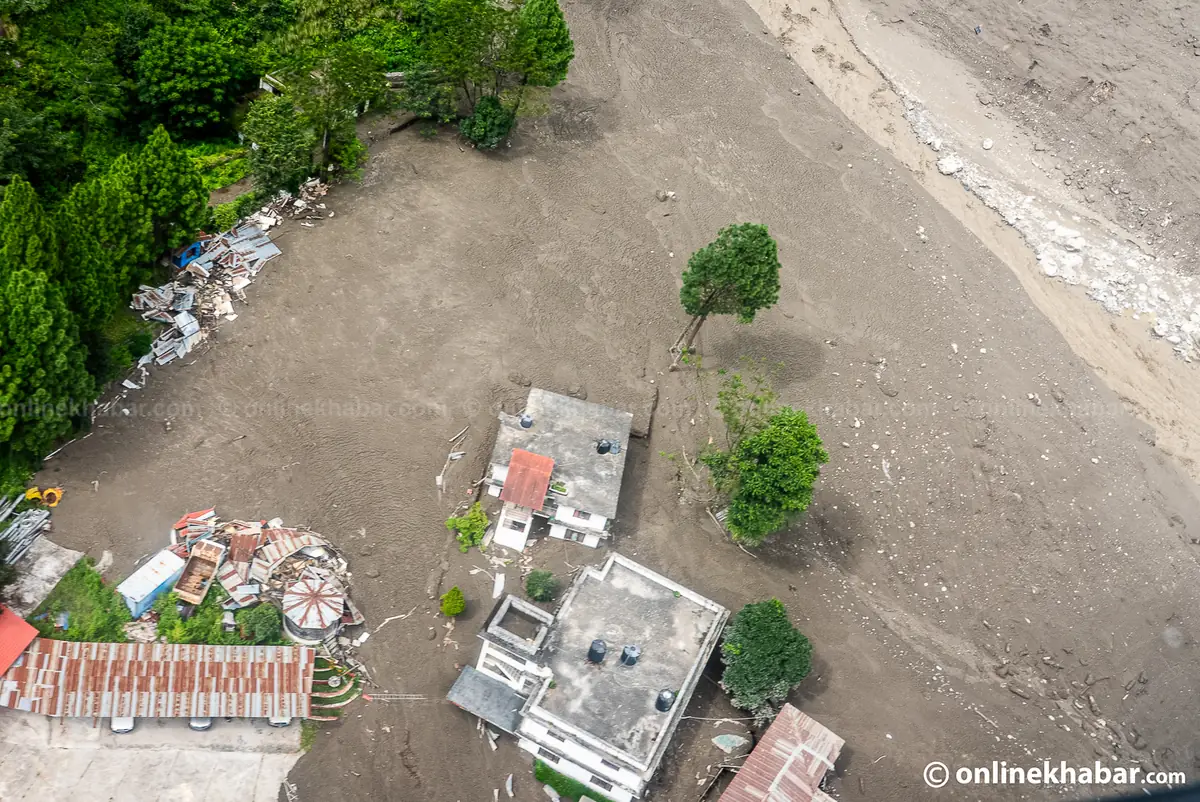
Aerial close view of concrete buildings standing in a flat grey plain of silt with only roofs and upper walls clear
The buildings did not fall down. The ground came up around them, which is why the recovery is being done with excavators rather than by searching rubble.Kamal Prasai and Dinesh Gautam, Onlinekhabar.

District Administration Offices are verifying each missing person and entering confirmed names into the government's Setu system. Once you have reported someone, you can ask the District Administration Office for the district where the person was last known to be to confirm that the name has been entered. It helps to write down the name of the official you spoke to and the date.

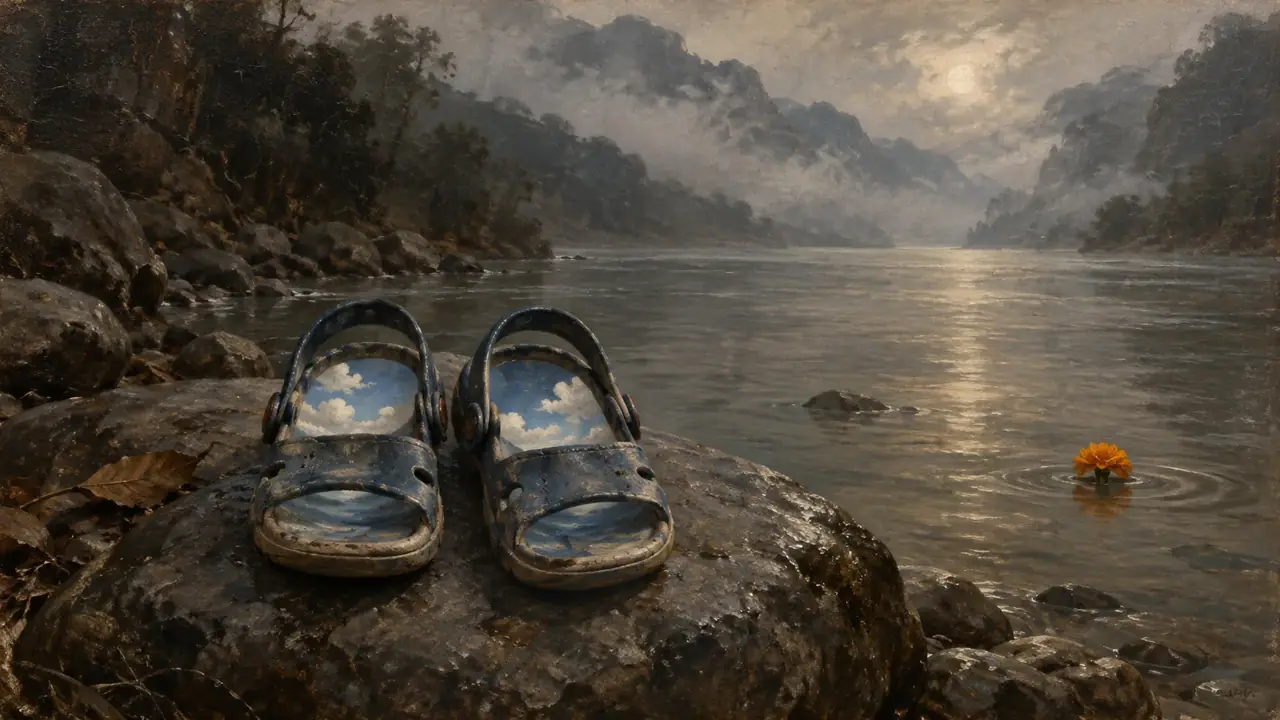
A pair of small worn sandals on a river stone, each holding a patch of blue sky and cloud, with a marigold floating on the still river behind.
Write the date and the official's name down. It is the only record you will hold yourself.Illustration made for the Rasuwa flood report with an image model. It is not a photograph.

An ordinance amending several disaster-related laws, and a Special Procedure, 2083 under it, were published in the Nepal Gazette on 9 October 2026. They let a person missing in this flood be declared dead without the 12-year wait the Civil Code otherwise requires, so that the family can receive relief and a death certificate (Kathmandu Post, 15 October).

A close family member applies at the ward office with proof of the missing person’s identity, proof of the relationship, and a self-declaration that the person went missing in the flood. The ward allows up to 5 days for applications, then publishes the list with 3 days for claims and objections, and the District Disaster Management Committee decides within 5 days. If no family member can apply, the ward chair can file after an inquiry with the ward secretary and police. Each district sets its own dates, so please ask your ward office now rather than wait (Makwanpur’s timetable, for example).

On 30 September 2026 the authority’s chief described the amounts as immediate relief, not final compensation: Rs 200,000 when one member of a family dies and Rs 100,000 for each further person (Kathmandu Post, 29 September). Some later reports give Rs 200,000 for each person, so please confirm the amount with your ward office. Separately, NDRRMA’s report of 16 October 2026 says cash relief of Rs 45,000 each had reached 4,108 displaced households, and 943 people were still living in 13 holding centres (Kathmandu Post, 27 October).

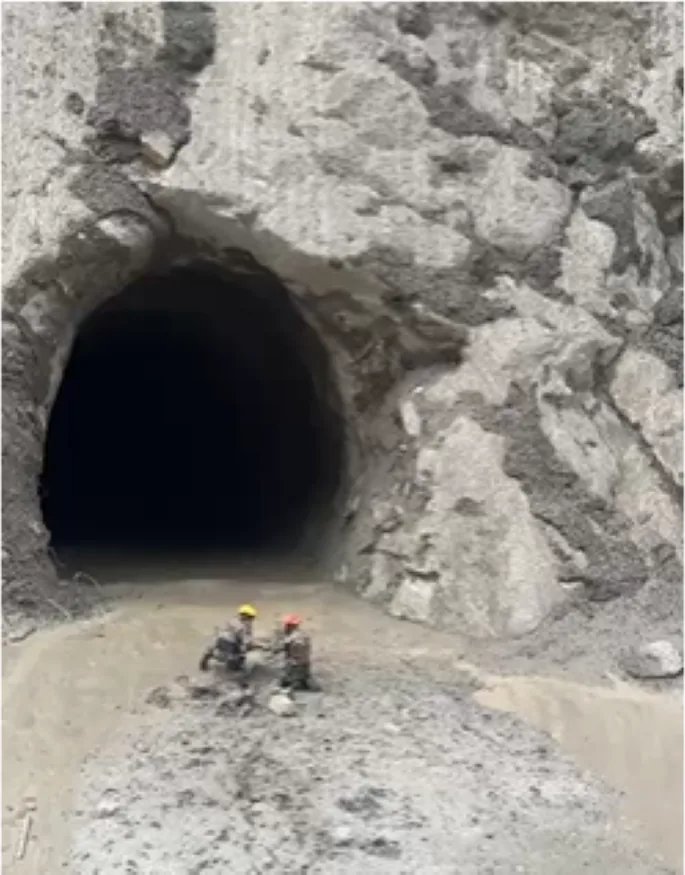
If your relative worked at a hydropower site, the project operators are reporting to the district authorities, and searching was still going on at two tunnel sites on 30 September 2026, after the government moved its effort from rescue to search and recovery. Use the route above as well, not instead.

Two rescuers in hard hats kneeling at the mouth of a hydropower tunnel surrounded by grey flood silt
The scale a rescue works at. Two rescuers at the tunnel mouth, and the grey covering everything is what the river left.Nepali Army, via The Rising Nepal.

Families abroad should contact their own embassy. We have verified the flood helpline of one embassy only, and for any other please use that embassy's own website:

If you are one of our students or applicants and your family is affected, please call us on 01-5091616. We will help with the calls and with anything your admission needs.

Last reviewed by Imperial College of Engineering. Every figure on this page is cited to the document it came from.

Sources: NDRRMA Rasuwa-Bhotekoshi Flood Situation Report #20, 21 September 2026 (DNA sample instruction, Setu system verification, forensic teams); NDRRMA's 37th executive committee, Radio Nepal, 30 September 2026 (the relief route, DNA samples in testing); NDRRMA figures to 16 October 2026 as reported by DC Nepal (the 5,285 missing); Kathmandu Post, 15 and 27 October 2026 (the declaration procedure, cash relief, holding centres);Nepal Police's own bulletin for 14 October 2026lists 4,720 missing, a different count that the authority has not adopted. More helplines are on the emergency page.

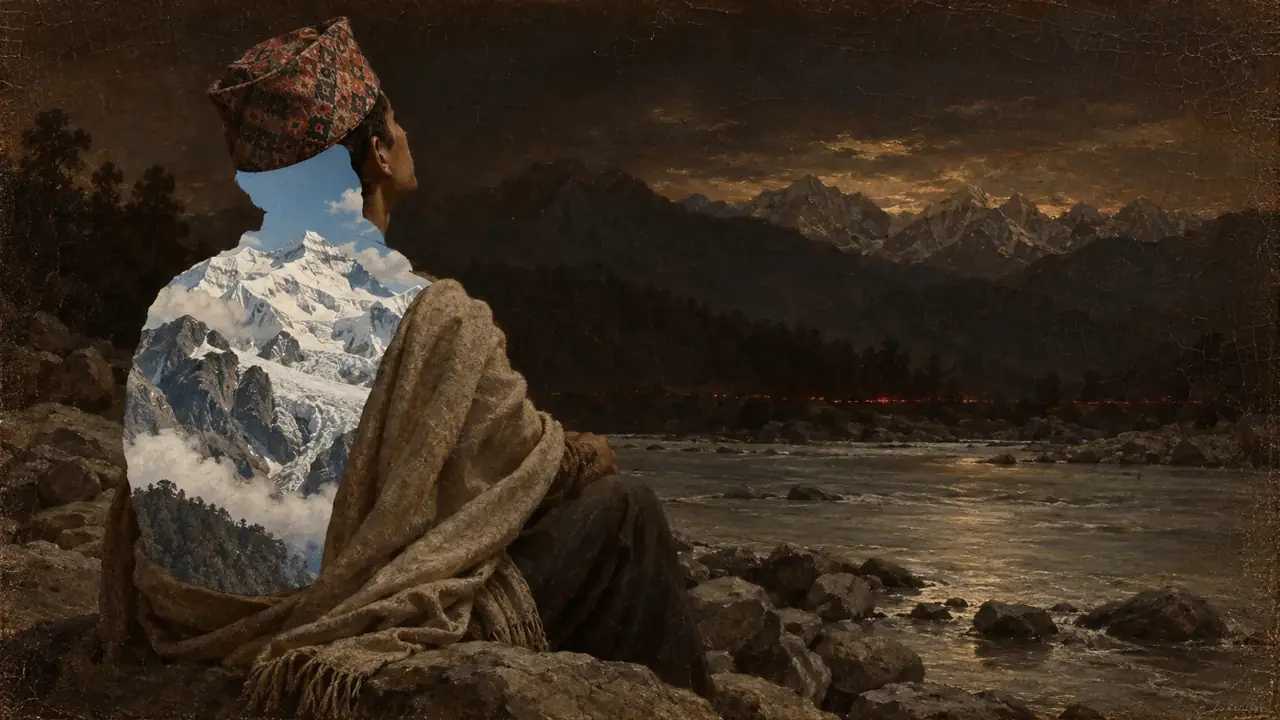
Oil painting of a man in a dhaka topi and shawl sitting on a riverbank at dusk, seen from behind, his head and back filled with a glacier and blue sky.
For the families still waiting for news.Illustration made for the Rasuwa flood report with an image model. It is not a photograph.